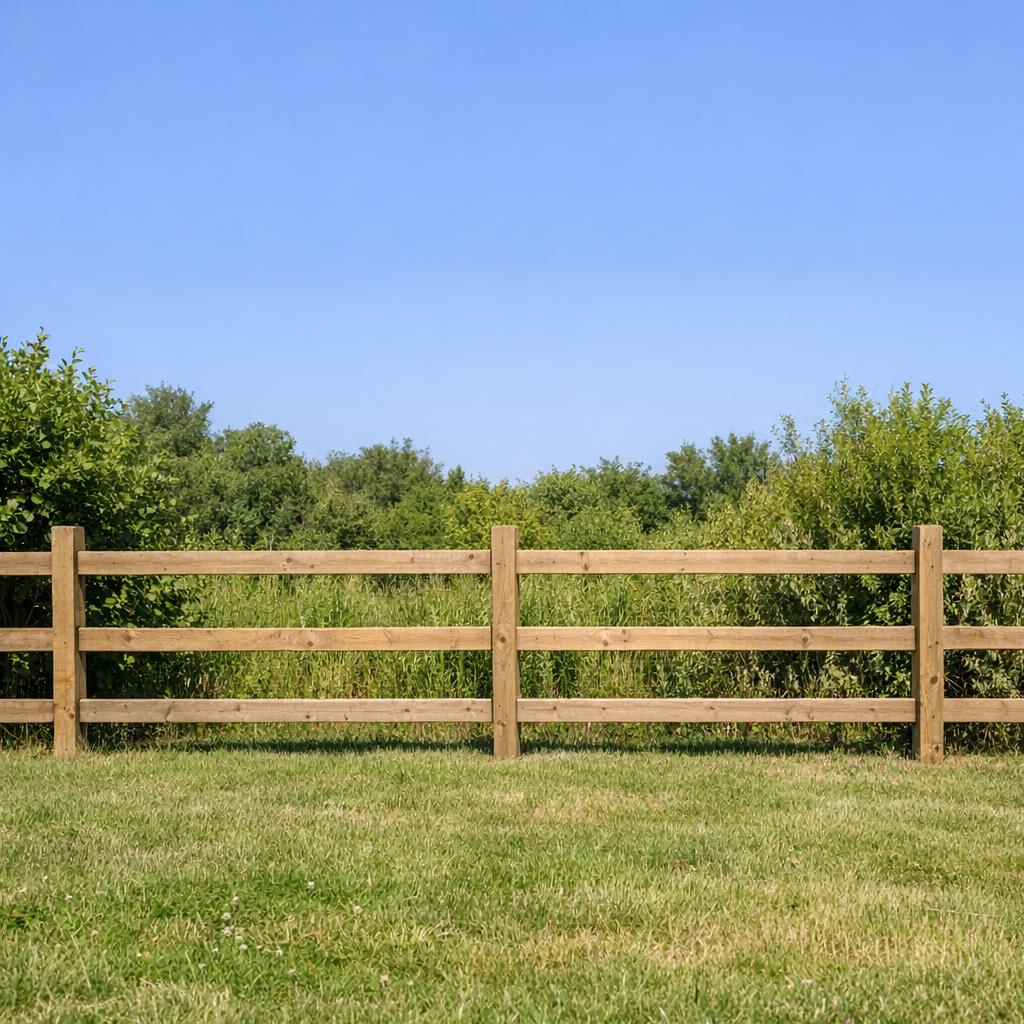
Building a fence in your front yard in Ontario is entirely possible — but the answer comes with conditions. Municipal bylaws across the province set strict rules on how tall that fence can be, where it can sit on your lot, and what it can be made of. Get it wrong, and you may be looking at a costly removal order.
In most cities across the Greater Toronto Area, front yard fences are capped at roughly 1.0 to 1.2 metres — about three to four feet. The reason is straightforward: municipalities prioritize clear sightlines for drivers and pedestrians, and want to keep neighbourhoods feeling open. Toronto’s rules fall under Chapter 447 of the Municipal Code, while cities like Vaughan, Mississauga, and Brampton each have their own bylaws with slightly different limits. Before you build, you’ll need to confirm your property boundaries, check whether a permit is required, and contact Ontario One Call to locate underground utilities.
Height Limits Across the GTA
Toronto’s Chapter 447 draws a clear line at 2.4 metres from any lot line facing a public street. Within that zone, a solid fence can’t exceed 1.2 metres (4 feet) — but if your design is at least 50% open, like wrought iron or spaced pickets, you can go up to 2.0 metres. Push the fence farther back than 2.4 metres from the lot line, and the 2-metre limit applies regardless of style. Height is measured from the adjacent grade — the ground right beside the fence — not from a basement floor or retaining wall.
Outside Toronto, the rules tighten considerably. Vaughan sets one of the strictest front-yard limits in the GTA at just 0.9 metres (3 feet) under By-law 23-2014. Brampton caps it at 1 metre, Mississauga allows 1 metre for closed designs but up to 1.5 metres for open ones under its 2025 bylaw, and Markham permits 1.2 metres.
Corner lots face an extra layer of scrutiny: Toronto’s daylight triangle rule prohibits anything over 0.75 metres within the 7.5m × 7.5m corner area — a restriction that catches many homeowners off guard.
Permits, Surveys, and Utility Locates
Most residential fences built within the allowed height don’t require a building permit — but that changes quickly once you push past certain thresholds. A pool enclosure needs both a Zoning Certificate and a Pool Fence Enclosure Permit. A fence on City property or a road allowance requires a street work permit (free, but mandatory). If you want to exceed the maximum height, you’ll need to file a Fence Exemption Application — $200 in Toronto, $499 in Vaughan. Those applications are rarely approved, and neighbours will be notified and may attend the hearing.
Before any post goes in the ground, you’ll need to know exactly where your property ends. The only conclusive answer comes from an Ontario Land Surveyor, who places iron bars at lot corners and issues a Surveyor’s Real Property Report. Expect to pay between $1,000 and $2,500 for a standard residential lot. Under Ontario’s Line Fences Act, if the fence sits directly on the shared boundary, both neighbours split construction and maintenance costs equally.
Ontario law requires you to contact Ontario One Call at least five business days before breaking ground. The service is free and maps everything below the surface — electrical lines, gas pipes, water mains, phone cables, and fibre optics. Locates are valid for 60 days, so if your project stalls, you’ll need to reapply.
Materials, Costs, and Upkeep
Not every material is welcome in a front yard. Wood, vinyl, aluminum, chain link, wrought iron, and composite are all permitted — and a well-maintained hedge counts too. What you can’t use: barbed wire, razor wire, sheet metal, corrugated panels, or anything that could carry an electrical charge. Solid privacy panels tend to raise flags in front yards; open or decorative designs get approved far more easily.
Installation in the GTA runs $40 to $95 per linear foot — roughly $4,000 to $9,500 for a typical 100-foot project. Cedar sits in the $45–$75 range, vinyl at $45–$85, aluminum at $35–$65, and composite at $55–$95. GTA contractors charge 15–20% more than rural areas, and after material prices climbed 12–18% in 2025, there’s little reason to expect relief. Budget an additional 10–25% for site prep, gate hardware, and old fence removal.
Lifespan varies just as much as price. Cedar holds up 20–30 years with annual sealing ($100–$250); pressure-treated lumber lasts 15–20 years with modest upkeep. Vinyl is the low-maintenance option — no staining, no rot, and it handles Ontario’s freeze-thaw cycles without complaint. Vaughan’s bylaw explicitly requires fences be kept in good repair and free of graffiti.
Why Work With Oakly Landscaping
Navigating municipal bylaws, coordinating surveys, and selecting the right materials can quickly become overwhelming. Oakly Landscaping handles every step — from permit research and property line verification to professional installation and finishing touches. Our team designs front yard fences that meet local regulations while enhancing your home’s curb appeal. Whether you’re looking for a classic cedar picket design or a modern aluminum option, we deliver lasting results across the Greater Toronto Area.
Transform Your Front Yard with Oakly Landscaping
Once you’ve sorted out your fence’s height, placement, and permits, the next step is making sure your front yard actually looks its best. A well-designed front yard does far more than frame a fence — it sets the tone for your entire property. That’s where Oakly Landscaping comes in. Serving homeowners across the Greater Toronto Area, Oakly specialises in transforming front entrances with interlock, sod, planting, grading, and finishing details that deliver lasting curb appeal. Whether you’re starting fresh or refreshing an outdated layout, their team handles every phase from design to build. Explore their front yard renovation services in the GTA and get a free quote today.